Bake In Space
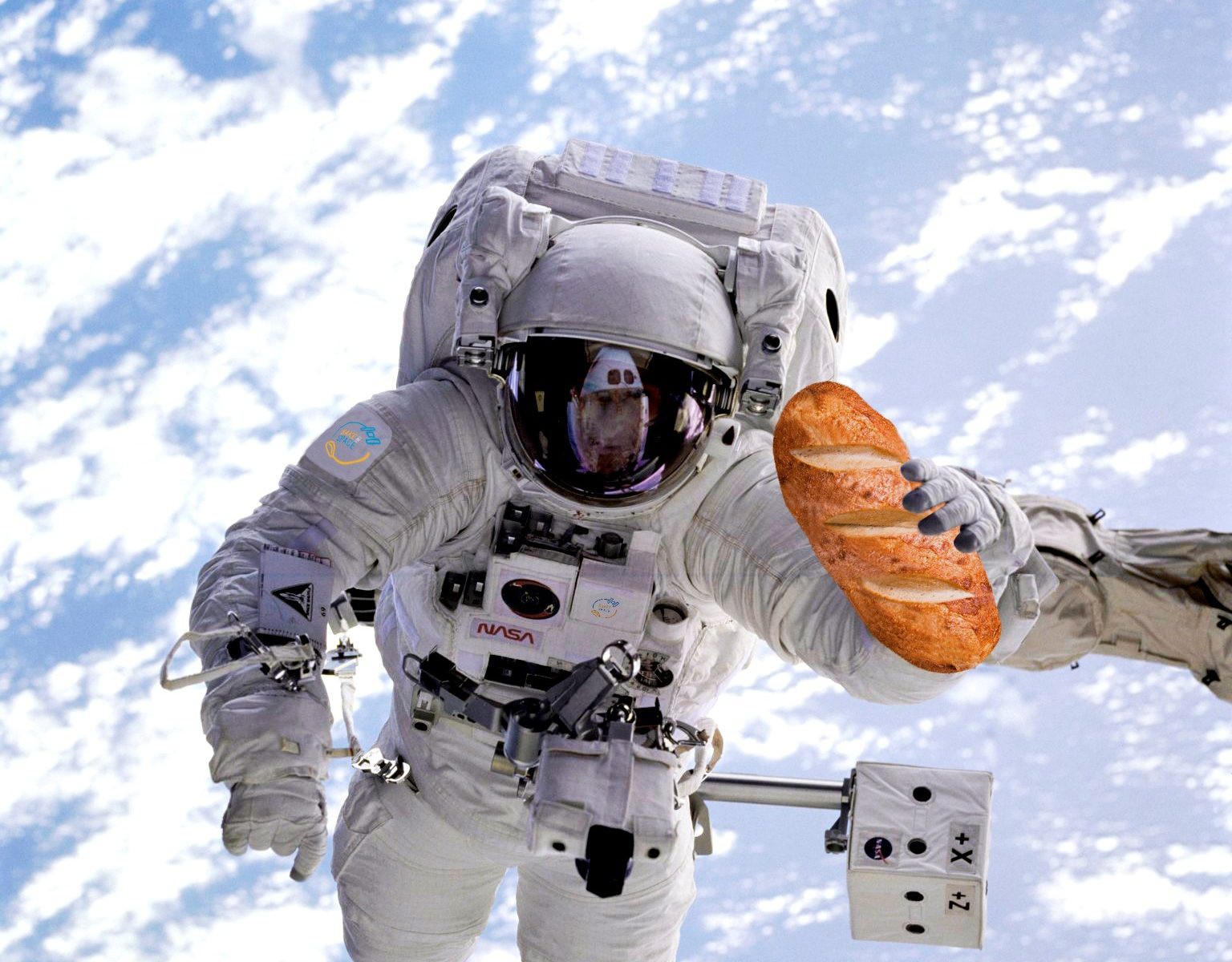
Bake In Space was a space-food innovation project developing a safe, low-power system for baking fresh, crumb-free bread aboard the International Space Station. The project used bread as a practical technology demonstration for improving food quality, wellbeing and long-term self-sufficiency in human spaceflight.
Overview
Bake In Space was a space-food innovation project exploring how fresh bread could be produced safely aboard the International Space Station (ISS).
The initial objective was to bake a familiar German bread roll in microgravity. Behind that apparently simple goal was a wider challenge: developing food preparation technologies that could improve comfort, wellbeing and quality of life for people living and working in space for extended periods.
The project treated bread as a practical stepping stone towards more ambitious forms of food self-sufficiency. Future human missions beyond low Earth orbit will require systems that use limited power, space, water and supplies efficiently. Food production, preparation, storage, hygiene and waste management will all be important parts of that transition.
The challenge
Bread is difficult to prepare in space.
On Earth, bread is a familiar, low-risk food. In a spacecraft, loose crumbs can float freely, potentially affecting ventilation systems, sensitive equipment or crew safety. Conventional ovens also use substantial power, generate high surface temperatures and depend on operating conditions that are unsuitable for a tightly controlled spacecraft environment.
Bake In Space therefore had to address several connected constraints:
- Preventing crumbs from becoming a spacecraft contamination hazard.
- Limiting exterior surface temperatures to protect crew members.
- Operating within a restricted ISS power budget.
- Avoiding unsafe handling of hot air inside a pressurised spacecraft.
- Designing a suitable dough product for low-power baking.
- Ensuring food safety, hygiene and storage stability.
- Considering how the system could support future, more self-sufficient food production beyond Earth.
The project’s early target was a compact oven capable of baking a specially developed dough product in microgravity while meeting applicable operational and safety requirements.
Why bread?
Food is more than nutrition. It supports routine, morale, comfort, cultural identity and quality of life.
For crews spending long periods away from Earth, fresh food can provide a meaningful improvement over a diet based mainly on pre-packaged products. Bread was chosen not only because it is widely familiar, but because its production brings together many of the technical challenges that future space-food systems will need to solve.
Bake In Space positioned fresh bread as an accessible demonstration of wider capabilities:
- Safe food preparation in microgravity.
- Low-energy cooking and processing.
- Shelf-stable or space-compatible ingredients.
- Food-quality improvements for long-duration missions.
- Technology development relevant to future lunar and Martian habitats.
- Potential terrestrial applications for resource-constrained environments.
Technical approach
The initial Bake In Space concept centred on a compact, space-ready oven and a dough formulation designed for microgravity.
Low-power baking
Conventional ovens operate at high temperatures and typically require far more electricity than could reasonably be allocated to a small ISS food experiment. The Bake In Space oven concept was designed to operate at roughly 220–270 watts, around one-tenth of the power used by many household ovens.
This constrained the heating process and required careful consideration of how to produce an acceptable bread product without conventional preheating or high-temperature baking.
Temperature and crew safety
ISS safety requirements limited the temperature of accessible surfaces. The oven therefore needed to avoid presenting a burn hazard to astronauts.
A proposed operating sequence involved loading the product into a cool oven, heating through the baking cycle and then cooling before access. This differed substantially from ordinary terrestrial baking, where bread is placed into and removed from a hot oven.
Crumb reduction
Crumbs are a particular challenge in microgravity because they do not settle to the floor. Bake In Space explored dough and baking approaches intended to produce a bread roll that remained structurally stable and reduced the risk of loose particles.
Water management was also an important consideration. Adding moisture during the cycle was investigated as a way to limit drying and help achieve an appropriate texture under low-power baking conditions.
Food safety and ingredients
The project considered the challenges of using yeast, sourdough cultures and other biological ingredients in a spacecraft environment. Open or uncontrolled cultures could introduce contamination risks, so ingredient stability and hygienic handling were central to the concept.
The longer-term vision included a sequence of demonstrations spanning the wider bread-production chain: growing grain, processing ingredients, mixing, baking and managing waste in constrained environments.
My role
I worked with Bake In Space as Editor and UK Coordinator.
My contribution focused on communicating the project’s purpose, technical challenges and wider relevance to audiences across the space, innovation and food sectors. This included editorial development, science communication, project messaging and UK-facing coordination.
The role involved translating a complex engineering and food-technology concept into clear, credible public communication. The central narrative connected a recognisable human experience—fresh bread—with major questions about long-term human spaceflight, sustainability and life beyond Earth.
Communications approach
The project needed to communicate on several levels at once:
- Technical: explaining the constraints of baking safely in microgravity.
- Scientific: connecting the demonstration to research on human spaceflight and food systems.
- Human: showing why familiar, freshly prepared food matters for wellbeing.
- Commercial: identifying possible applications, partnerships and technology spin-offs.
- Public: making the project understandable and memorable beyond specialist space audiences.
The message “baking where nobody baked before” provided an accessible entry point, while the supporting communication explained the serious engineering, safety and sustainability work behind the concept.
Innovation and potential applications
Bake In Space considered the ISS demonstration a first step rather than an end in itself.
Potential long-term applications included:
- Fresh-food systems for future lunar and Mars missions.
- Compact, low-energy food-preparation technology.
- New approaches to hygienic processing in enclosed environments.
- Products and intellectual property with terrestrial applications.
- Food solutions for aircraft, ships, field environments or energy-constrained settings.
- Branded experiences and products connected to the commercial space sector.
- Research access to the oven platform for other ISS experiments.
The project also linked its work to the increasing commercial use of the ISS and the broader development of human spaceflight beyond low Earth orbit.
Recognition
Bake In Space received recognition through the 2017 INNOspace Masters competition. The programme highlighted the project as an example of innovation arising from the commercialisation of the ISS and from the growing European space-technology ecosystem.
The INNOspace Masters profile described the project’s aim of baking German bread rolls on the ISS using a space-ready oven and dough formulation designed for weightlessness. It also identified prospective technology and business benefits beyond the initial demonstration. INNOspace Masters
Public engagement
The project attracted international interest because it made a complex spaceflight challenge tangible.
Media coverage focused on the engineering problem of preparing a familiar food in an unfamiliar environment: limited electrical power, strict safety limits, the risk of crumbs and the need to develop a suitable dough product. These stories helped connect public curiosity about space travel with the practical work required to support human life away from Earth.
Limitations and status
Bake In Space was an innovation and technology-demonstration programme. Its ambition extended beyond the immediate task of baking bread in microgravity, but many proposed future stages—such as end-to-end grain-to-bread production in space—would require substantial further development, testing, partnership and flight opportunities.
The project should therefore be understood as an early-stage contribution to the broader challenge of producing fresh food safely and sustainably during human space exploration.
Related media
Keywords
Human spaceflight; International Space Station; space food; microgravity; fresh food; bread; food safety; low-power engineering; science communication; space sustainability; innovation.